

Uneven skin tone, dark spots, and pigmentation that won't go away are some of the most frequent skin problems today. A lot of individuals want to know how to get rid of dark spots naturally, however they often mix up dark spots with pigmentation.
Ayurveda takes a deeper, root-cause-based approach that not only fades spots but also brings back natural brightness.
This guide makes the difference evident and reveals what really works, especially when contemporary skincare meets ancient Ayurvedic wisdom.
Important Points
• Dark patches and pigmentation are not the same thing.
• Hormones, inflammation, and sun damage are the main causes.
• Ayurveda heals pigmentation by bringing Pitta dosha back into balance.
• Herbal oils (Tailam) go deeper than lotions that sit on the skin.
• The best benefits come from using both oil and cream together.
• A safe, natural, long-term treatment that doesn't use toxic chemicals.
What is the Difference Between Pigmentation and Dark Spots?
| Factor | Dark Spots | Pigmentation |
|---|---|---|
| Appearance | Small, localized spots | Large uneven patches |
| Cause | Acne scars, sun exposure | Hormonal imbalance, sun, heat |
| Ayurvedic Term | Vyanga (localized) | Pitta-induced discoloration |
| Treatment Focus | Spot correction | Full skin tone balance |
Before choosing the best spot corrector or Ayurveda treatment for tan removal, it's important to know the difference.
What Causes Dark Spots and Pigmentation?
Common Reasons
• Too much sun exposure (UV damage)
• Changes in hormones (melasma)
• Inflammation of acne
• Pitta dosha, or heat imbalance
• Cosmetics made with chemicals
• Getting older and oxidative stress
Ayurveda focuses on naturally fixing melanin imbalance, while modern treatments often temporarily bleach the skin.
The Ayurvedic Way to Get Rid of Dark Spots Naturally
Ayurveda sees pigmentation as a problem with the blood and Pitta, and it uses herbs that:
• Cool down too much heat
• Stop too much melanin
• Fix skin that has been harmed by the sun
• Make blood flow better
• Help skin tone balance out
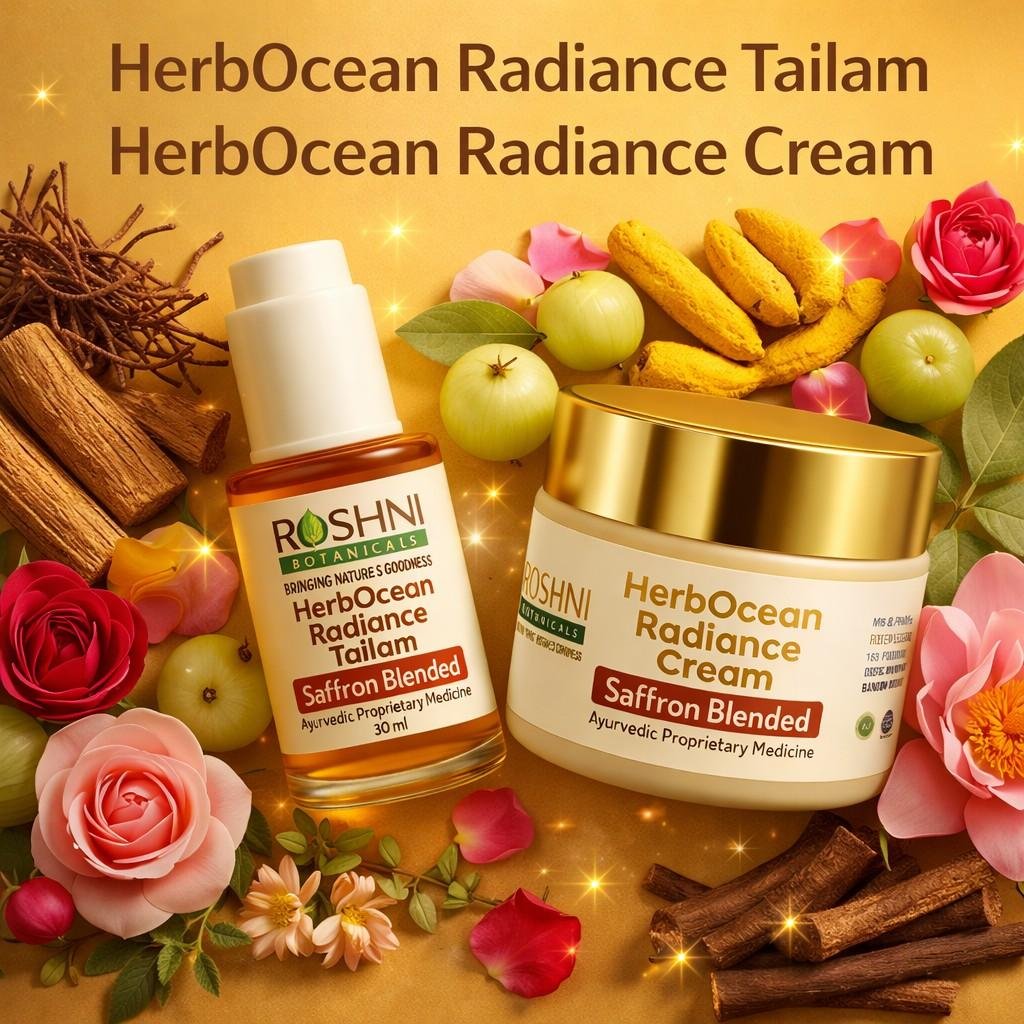
HerbOcean Radiance Tailam & Cream really stand out here.
HerbOcean Radiance Tailam – Ayurvedic Oil That Deeply Repairs
The best Ayurvedic tailam for skin with uneven color and pigmentation.
Ingredients & Ayurvedic Benefits
| Ingredient | Ayurvedic Benefit |
|---|---|
| Raktchandan | Reduces melasma & inflammation |
| Manjith | Blood purification, pigment control |
| Harad, Amla, Baheda | Antioxidant skin repair |
| Haldi | Natural tyrosinase inhibitor |
| Kamal & Padmaakh | Cooling, complexion enhancement |
| Kesar | Brightening & radiance |
| Til Taila | Deep herbal penetration |
| Lavender, Rose, Mogra | Skin calming & rejuvenation |
Why Tailam Works Better
• Penetrates deeper skin layers
• Treats root-cause pigmentation
• Ideal for old dark spots on face naturally fast
• Safe for long-term use
HerbOcean Radiance Cream – Advanced Hypopigmentation Care
Targeted spot corrector + skin brightening solution.
Ingredients Overview
| Ingredient | Function |
|---|---|
| Chandan & Raktchandan | Cooling & pigmentation control |
| Manjith & Haldi | Melanin regulation |
| Coconut Oil | Skin barrier repair |
| Kamal, Kakoli, Padmaakh | Radiance enhancement |
| Rose, Lavender, Mogra | Anti-aging & soothing |
Benefits
• Targets melasma & dark patches
• Improves uneven skin tone
• Reduces sun-induced pigmentation
• Visible glow without irritation
FAQs – Answering What People Are Really Looking For
How to quickly and naturally get rid of black spots on your face?
Using herbal tailam at night and cooling herbs during the day every day for 6 to 8 weeks will show clear results.
Is it safe to use Ayurvedic medicine for melasma?
Yes. Ayurveda doesn't use steroids or harsh chemicals, therefore it's safe to use for a long time.
Is it okay to use Radiance Tailam every day?
Yes, especially at night when it works best.
Is this okay for skin that is sensitive?
Yes. Made with relaxing floral distillates.
🧪 References from Science and Ayurveda
-
Rathee et al. (2021). Skin hyperpigmentation and its herbal therapy. The Future Journal of Pharmaceutical Sciences.
-
Sharma et al. (2015). Ayurvedic Varnya herbs and their effect on tyrosinase. The Old Science of Life.
-
Balkrishna et al. (2023). Ayurvedic methods for sun pigmentation. International Journal of Dermatology.
-
Goswami & Sharma (2020). Herbal extracts in pigmentation disorders. Current Trends in Pharmaceutical Research.
-
Tan et al. (2021). Plants for managing pigmentation. The Phytochemistry Research Journal.
-
Jadhav & Nunse (2022). Skin pigmentation disorders. IJPR.
-
Iche et al. (2024). Ayurvedic melasma etiopathogenesis. JAIMS.
-
Popaniya et al. (2024). Medicinal plants that stop tyrosinase. Asian Journal of Pharmacy.