
Key Takeaways
- PIH (Post-Inflammatory Hyperpigmentation) is the darkening of skin after acne or injury, especially common in Indian & melanin-rich skin.
- Ayurvedic herbs like turmeric, manjistha, and saffron have proven skin-brightening and healing properties.
- HerbOcean Radiance Cream combines classical Ayurvedic wisdom with modern dermatology to fade pimple marks and restore skin radiance.
- Consistency matters: regular application, along with sun protection, is key to preventing new spots.
🌸 What is Post-Inflammatory Hyperpigmentation (PIH)?
Post-Inflammatory Hyperpigmentation (PIH) refers to dark spots that remain after acne, pimples, or skin inflammation.
- Common in Indian skin due to higher melanin activity.
- Appears as brown, purple, or black marks depending on depth.
- Triggered by acne, eczema, burns, or even harsh cosmetic treatments.
Why PIH is More Stubborn in Indian Skin
- Higher melanin content means greater risk of pigmentation.
- Sun exposure worsens the marks.
- Standard chemical treatments may cause irritation or rebound pigmentation.
🌿 Ayurvedic Perspective on PIH
In Ayurveda, PIH relates to imbalances in Pitta dosha leading to excess heat and pigmentation in the skin.
- Pitta aggravation → skin inflammation → post-healing discoloration.
- Ayurvedic treatment focuses on:
- Cooling herbs 🌿 (turmeric, aloe vera)
- Blood purifiers 🩸 (manjistha, neem)
- Natural brighteners ✨ (saffron, sandalwood)
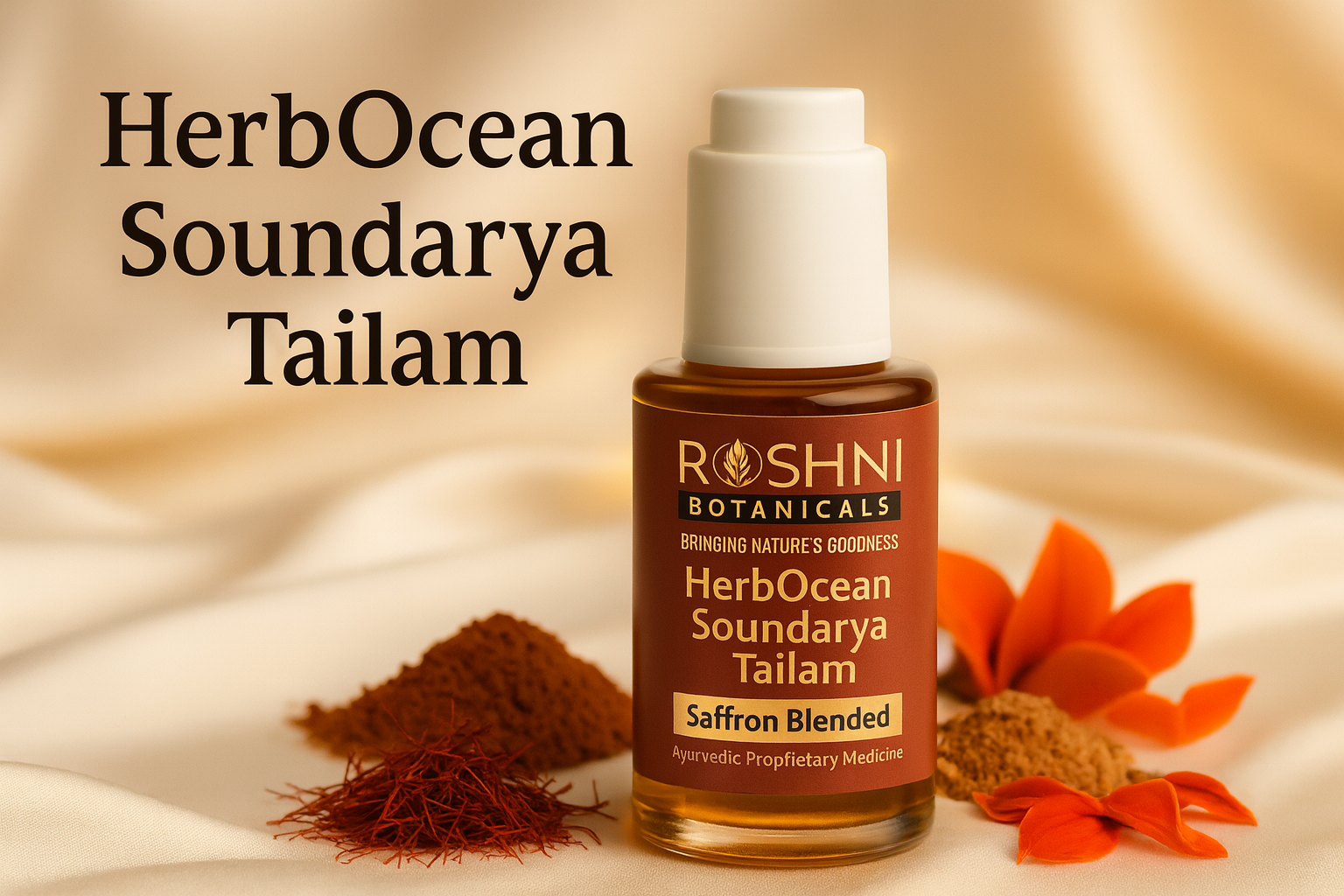
💎 HerbOcean Radiance Cream: Nature’s Answer to PIH
HerbOcean Radiance Cream is specially formulated by Roshni Botanicals to target acne scars and PIH naturally.
Unlike harsh bleaching creams, it is gentle, safe, and effective for long-term use.
⭐ Key Benefits
|
Benefit |
Ayurvedic Action |
Result |
|
Fades acne marks |
Manjistha (blood purifier) |
Clearer, even skin tone |
|
Brightens complexion |
Saffron & turmeric |
Natural glow |
|
Soothes irritation |
Aloe vera |
Calms inflamed skin |
|
Prevents new spots |
Antioxidant herbs |
Stronger skin barrier |
🌿 Core Ayurvedic Ingredients
|
Ingredient |
Ayurvedic Role |
Modern Research Insight |
|
Turmeric (Curcuma longa) |
Anti-inflammatory, Pitta-pacifying |
Curcumin reduces melanin synthesis (Kumar et al., 2021) |
|
Manjistha (Rubia cordifolia) |
Blood purifier, detoxifying |
Improves skin tone & reduces hyperpigmentation |
|
Saffron (Crocus sativus) |
Brightening & complexion enhancer |
Carotenoids reduce oxidative stress (Bathaie et al., 2014) |
|
Aloe Vera |
Cooling, soothing |
Proven wound-healing & scar-reducing effects |
|
Licorice (Glycyrrhiza glabra) |
Depigmenting, anti-inflammatory |
Glabridin inhibits tyrosinase (skin pigment enzyme) |
💡 How to Use HerbOcean Radiance Cream
- Cleanse your face with a mild, sulfate-free cleanser.
- Apply a pea-sized amount of HerbOcean Radiance Cream evenly.
- Massage gently in circular motions until absorbed.
- Use twice daily (morning & night).
- Always follow with sunscreen during the day to prevent worsening of PIH.
🧘 Preventing PIH Naturally
- Don’t pick pimples ❌ – it worsens scarring.
- Apply sunscreen 🌞 – PIH darkens with sun.
- Adopt a Pitta-balancing diet 🥒 – include cucumber, aloe juice, coriander.
- Hydrate & detoxify 💧 – keeps skin clear.
❓ FAQs on PIH & Ayurvedic Skincare
1. What is the best cream for pimple marks and dark spots?
HerbOcean Radiance Cream is formulated with turmeric, manjistha, and saffron—all clinically backed to reduce pigmentation.
2. Does turmeric help with post-acne marks?
Yes! Turmeric contains curcumin, which reduces inflammation and melanin overproduction.
3. How long does it take to fade PIH naturally?
With Ayurveda, visible improvement can be seen in 6–8 weeks of consistent use.
4. Can HerbOcean Radiance Cream be used on sensitive skin?
Yes, it is gentle and free from harsh chemicals, but always do a patch test.
5. How to prevent PIH in the first place?
Avoid picking pimples, protect your skin from the sun, and use Ayurvedic skincare regularly.
📚 References
- Bathaie, S. Z., et al. (2014). Saffron: The golden condiment with multiple bioactivities. Pharmacognosy Reviews, 8(16), 80–97. Link
- Kumar, S., et al. (2021). Curcumin and its role in dermatology. Indian Dermatology Online Journal, 12(5), 679–688. [DOI:10.4103/idoj.IDOJ_19_21]
- Mukherjee, P. K., et al. (2011). Botanical principles for cosmeceuticals. Journal of Ethnopharmacology, 137(1), 1–15.
Madan, R. K., & Levitt, J. (2014). A review of PIH treatment. Journal of Clinical and Aesthetic Dermatology, 7(1), 13–17.