π Key Takeaways
- Manjistha (Rubia cordifolia) is Ayurveda’s “complexion-enhancing” herb, treasured for centuries as a blood purifier and skin clarifier.
- It works on pigmentation, melasma, acne, scars, and dullness—both inside (by cleansing the blood) and outside (by brightening complexion).
- Modern research confirms its antioxidant, anti-inflammatory, and antibacterial properties, making it highly effective for acne and pigmentation.
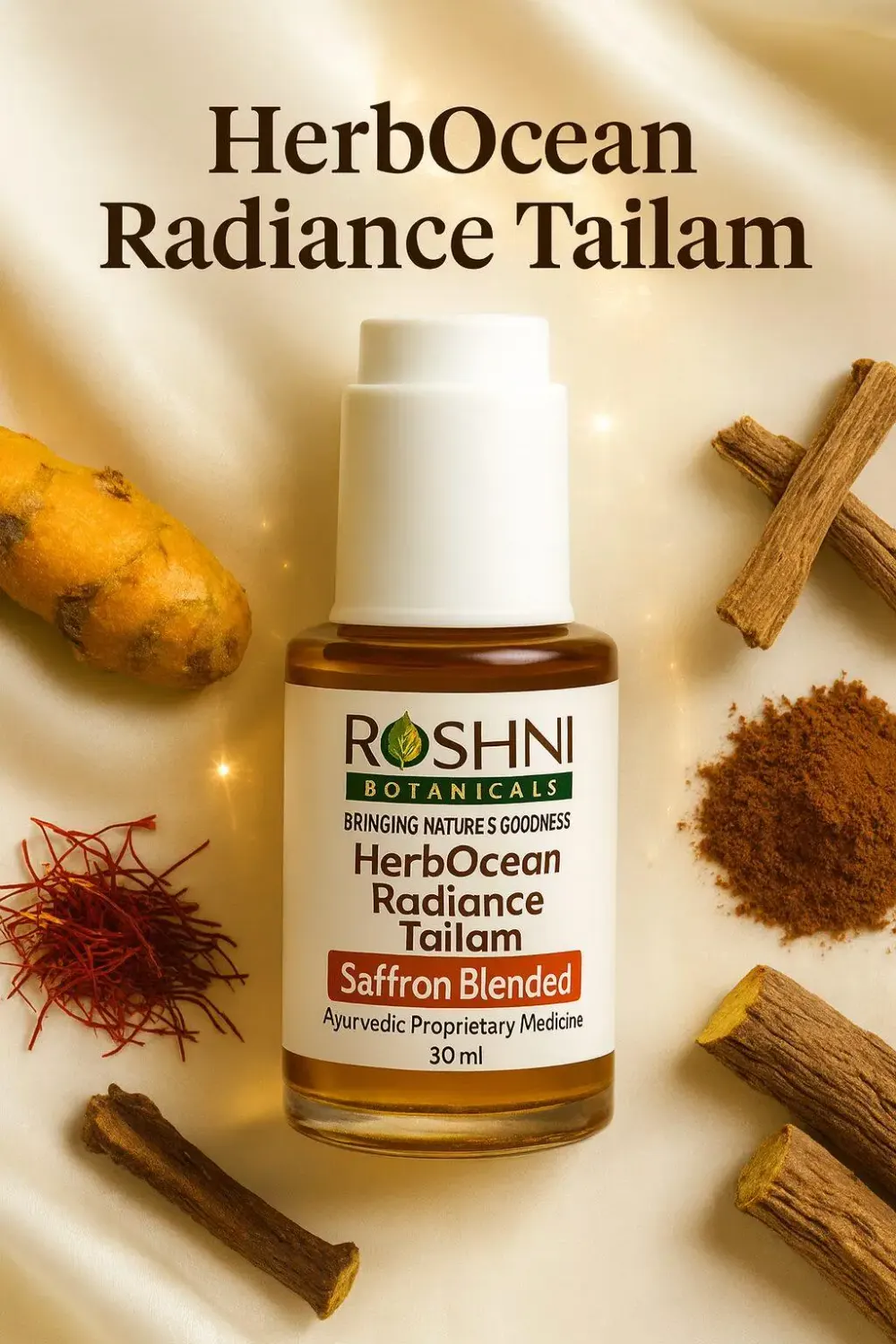
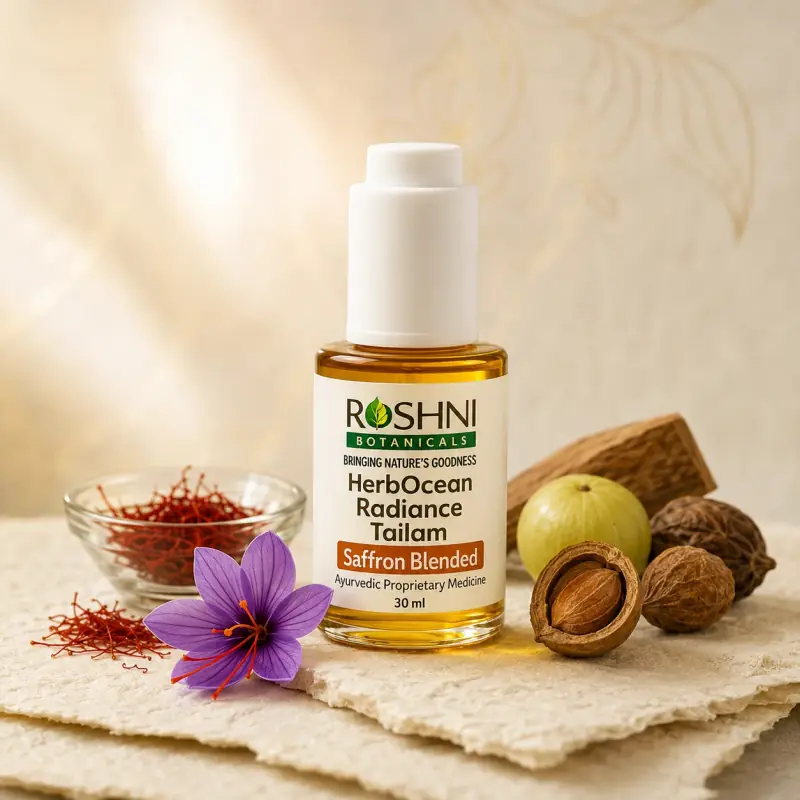
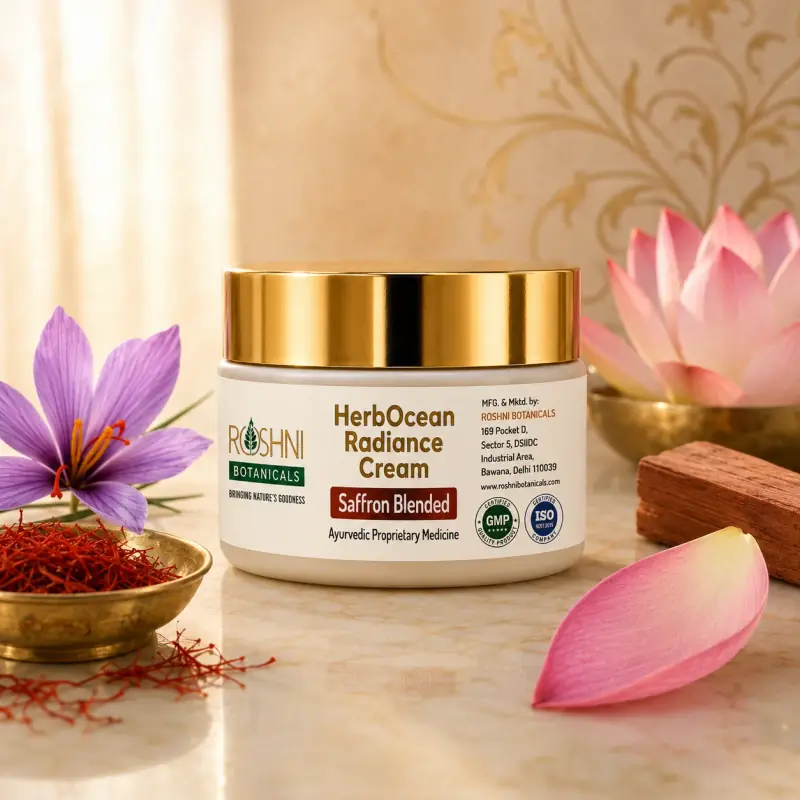
- HerbOcean Radiance Tailam and HerbOcean Radiance Cream harness the time-tested power of Manjistha in modern formulations for everyday skincare.
- Safe, natural, and holistic, Manjistha represents a bridge between ancient wisdom and modern skincare science.
β¨ Storytime: From Ancient Scrolls to Modern Skincare
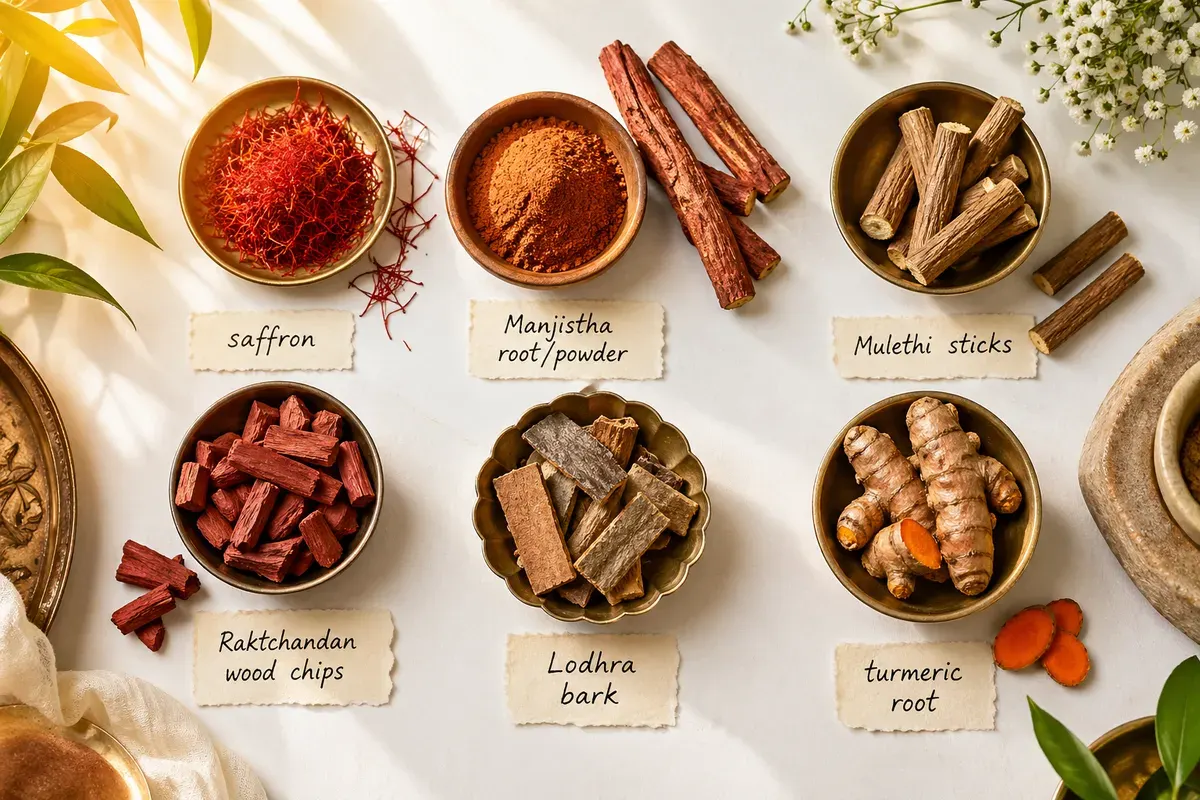
Imagine walking through an ancient Ayurvedic pharmacy—rows of earthen jars, herbal powders, and aromatic oils. Among them lies Manjistha root, its deep red hue staining everything it touches.
Thousands of years ago, Ayurvedic healers recognized that this humble root held a secret: when consumed or applied, it restored the radiance of the skin. Whether it was pigmentation, stubborn acne, or post-pregnancy melasma, Manjistha was prescribed as a “varna prasadaka”—a herb that gifts a healthy glow.
Fast forward to today, in our world of chemical peels and retinols, Roshni Botanicals revives this Ayurvedic gem through HerbOcean Radiance Tailam and Cream, offering a natural yet powerful solution for pigmentation and acne.
πΏ What is Manjistha? (Rubia cordifolia)
- Botanical Name: Rubia cordifolia
- Sanskrit Name: Manjistha (meaning “bright red”)
- Family: Rubiaceae
- Plant Type: A climbing perennial herb, native to the Himalayas and tropical Asia.
In Ayurveda, Manjistha is celebrated in Charaka Samhita and Sushruta Samhita as:
- Rakta shodhaka – Blood purifier
- Varnya – Complexion enhancer
- Tvak doshahara – Corrector of skin disorders
Its bioactive compounds—anthraquinones (alizarin, purpurin), glycosides, and tannins—give it powerful healing properties.
π Reference: Verma et al., 2016; Patil & Badgujar, 2024
πΈ Benefits of Manjistha for Skin
1. Pigmentation & Melasma
Hyperpigmentation is caused by excess melanin production. Manjistha works by regulating melanin synthesis and enhancing skin detoxification.
- Fades melasma patches
- Reduces uneven skin tone
- Restores natural complexion
π Pandey & Upadhyay, 2019
2. Acne & Breakouts
Manjistha has antibacterial activity against Propionibacterium acnes and controls inflammation, making it effective for acne-prone skin.
- Clears pimples
- Prevents recurrence
- Reduces acne scars
π Meena, 2015; Verma et al., 2016
3. Dark Spots & Scars
By boosting skin healing and controlling post-inflammatory pigmentation, Manjistha lightens scars and blemishes naturally.
π Tiwari & Singh, 2024
4. Dullness & Uneven Glow
Manjistha is considered a rasayana (rejuvenator). It enhances blood circulation, detoxifies skin tissues, and brings back a youthful radiance.
π Sharma et al., 2021
5. Sun Damage & Ageing
Modern research shows Rubia cordifolia’s extracts protect skin from UV-induced oxidative stress, slowing premature aging.
π Sharma & Sharma, 2024
πͺ Benefits Table
|
Skin Concern |
How Manjistha Helps |
Mode of Action |
|
Pigmentation / Melasma |
Evens out skin tone |
Melanin regulation |
|
Acne & Pimples |
Clears breakouts |
Antibacterial, anti-inflammatory |
|
Dark Spots / Scars |
Fades marks |
Heals & reduces PIH |
|
Dull Skin |
Restores glow |
Improves circulation |
|
Premature Aging |
Prevents wrinkles |
Antioxidant action |
π§ HerbOcean Radiance Tailam (Ayurvedic Melasma & Dark Spot Oil)
πΊ Inspired by classical Ayurvedic oils, this Tailam blends Manjistha with other skin-brightening herbs.
Why it works:
- Infused in a base oil, which allows deep skin penetration.
- Targets root causes of pigmentation rather than masking them.
Key Benefits:
- Fades melasma, pigmentation & blemishes
- Restores a healthy glow
- Nourishes and hydrates skin
How to Use:
- Apply 2–3 drops at night.
- Massage gently on pigmented areas.
- Pair with Radiance Cream for enhanced results.
π HerbOcean Radiance Tailam
πΌ HerbOcean Radiance Cream (Ayurvedic Skin Brightening)
Designed for daily use, this cream is light, fast-absorbing, and enriched with Manjistha.
Key Benefits:
- Brightens dull complexion
- Protects from environmental stress
- Keeps skin soft & even-toned
Best Routine:
- Morning: Apply Radiance Cream after cleansing.
- Night: Use Radiance Tailam followed by cream for deep repair.
π‘οΈ Safety & Precautions
- Topical use: Safe for most skin types.
- Patch test: Recommended before first use.
- Internal use: Should only be done under Ayurvedic physician guidance.
- Pregnancy & lactation: External use is safe; avoid self-medicating internally.
π Mannan et al., 2018; Devi Priya & Siril, 2014
πͺ Ayurveda + Modern Science: Why Manjistha Works
Ayurveda describes pigmentation (vyanga/melasma) as an imbalance in pitta dosha affecting blood and skin. Manjistha pacifies pitta, detoxifies rakta (blood), and supports tvak (skin health).
Modern research confirms:
- Antioxidant activity → Protects from oxidative damage.
- Antibacterial action → Clears acne-causing bacteria.
- Melanogenesis regulation → Reduces excess melanin.
Thus, Manjistha truly combines the best of traditional wisdom and scientific validation.
β FAQs
1. Does Manjistha whiten skin?
π No, it doesn’t bleach the skin. Instead, it restores your natural tone by reducing pigmentation and dullness.
π Internal link: [Does Manjistha whiten skin?]
2. Can Manjistha cure melasma permanently?
π Melasma can recur due to hormonal or sun exposure factors. However, consistent use of HerbOcean Radiance Tailam + Cream reduces patches and prevents relapse.
3. How long before results show?
π Visible improvement usually appears in 6–8 weeks, depending on skin type and lifestyle.
4. Can oily skin types use Radiance Tailam?
π Yes, it is lightweight and absorbs well. However, oily/acne-prone skin should use fewer drops and pair with Radiance Cream.
5. Is Manjistha safe for sensitive skin?
π Generally safe, but always perform a patch test before regular use.
π References
- Verma, A., Kumar, B., Alam, P., Singh, V. (2016). Rubia cordifolia: A review on pharmacognosy and phytochemistry. IJPSR. PDF
- Meena, V. (2015). Manjistha (Rubia cordifolia) – A helping herb in cure of acne. JAHM. PDF
- Patil, P.P., Badgujar, A.V. (2024). Formulation, Development and Evaluation of Herbal Face Serum using Manjistha. WJPR. PDF
- Pandey, C., Upadhyay, A.K. (2019). Phytochemical analysis of Herbal Oil using Rubia cordifolia. Research Spectra.
- Tiwari, D., Singh, S. (2024). Comprehensive review of acne & herbal therapy. WJARMS. PDF
- Sharma, I., Kaurav, H., Choudhary, G. (2021). Rubia cordifolia: Ayurvedic & Medicinal uses. Himalayan J Health Sci. PDF
- Devi Priya, M., Siril, E.A. (2014). Traditional and modern use of Indian Madder. Int J Pharm Sci Rev Res. Link
Mannan, M.A., Nyeem, M.A.B. (2018). Phytochemical and pharmacological evaluation of Rubia cordifolia. IJPNPE. PDF