
✨ Key Takeaways
- Lotus (Nelumbo nucifera) hydrates, soothes inflammation, and improves skin elasticity.
- Licorice root (Glycyrrhiza glabra / Yashtimadhu) is a natural tyrosinase inhibitor, reducing melanin and fading pigmentation.
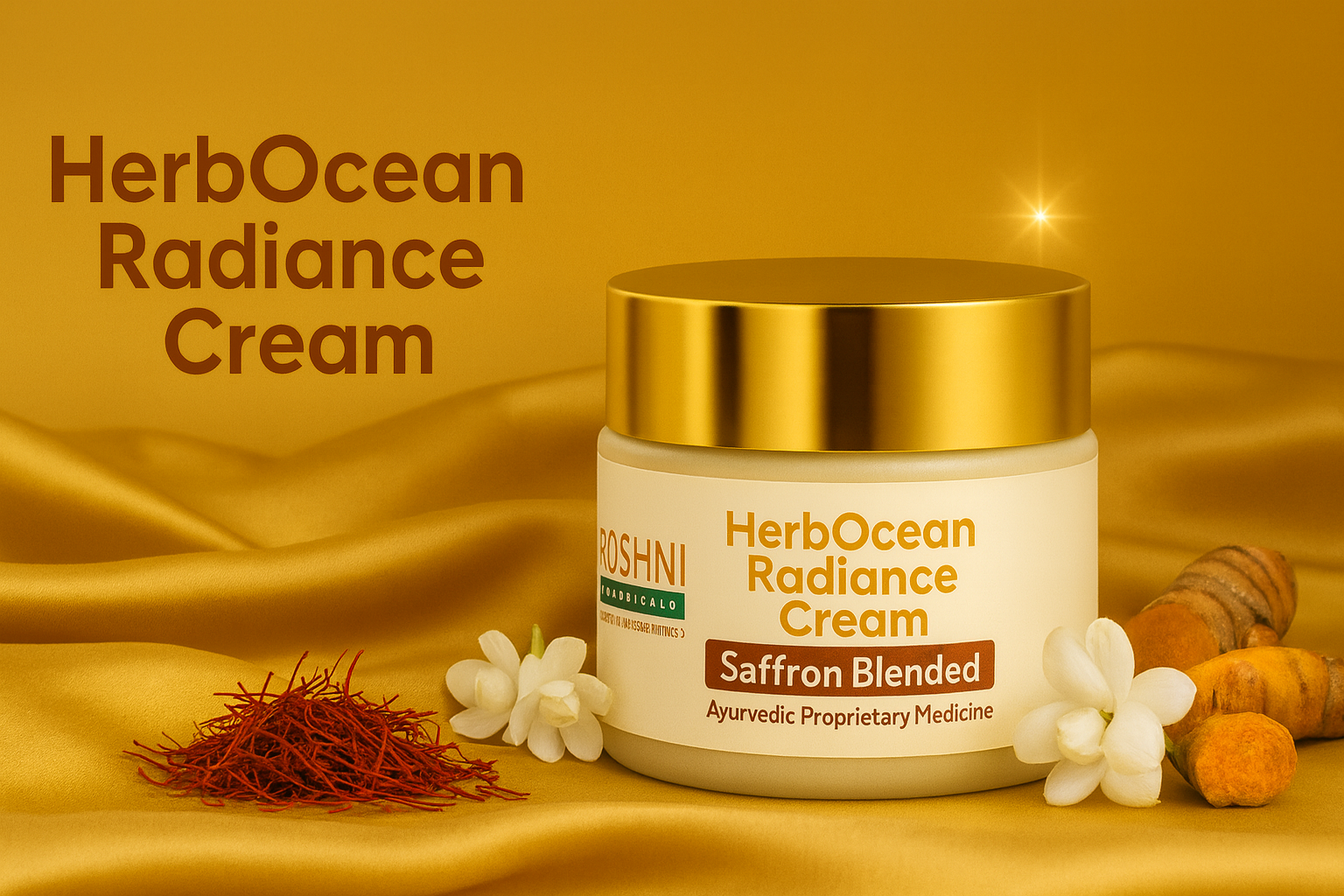
- Together, they form the foundation of HerbOcean Radiance Tailam and HerbOcean Radiance Cream, Ayurvedic alternatives to harsh bleaching agents like hydroquinone.
- Safe, gentle, and time-tested in Ayurveda with modern research validation.
🌿 Ayurveda Meets Science: Why Lotus and Licorice?
Ayurveda describes both Padma (Lotus) and Yashtimadhu (Licorice root) as Varnya dravyas — herbs that promote glowing, even-toned skin (Sharma et al., 2015). Modern dermatological studies confirm that:
- Lotus flower extracts contain flavonoids, polyphenols, and antioxidants that calm oxidative stress, protect collagen, and improve hydration (Patel et al., 2021).
- Licorice root extracts (glabridin, liquiritin, glycyrrhizin) are clinically proven to reduce hyperpigmentation, melasma, and sunspots (Cerulli et al., 2022; Damle, 2014).
🌸 Lotus Benefits for Skin
📌 Key Actions
- Hydrates and replenishes moisture
- Antioxidant protection from UV damage
- Reduces redness and irritation
- Improves elasticity and firmness
📊 Evidence from Research
|
Benefit |
Mechanism |
Source |
|
Anti-aging & hydration |
Polyphenols reduce oxidative stress |
Patel et al., 2021 [ResearchGate PDF] |
|
Skin soothing |
Anti-inflammatory alkaloids |
Joshi et al., 2017 |
|
Brightening |
Flavonoids regulate melanin |
Sharma et al., 2015 (Ancient Science of Life) |
🌿 Licorice Root (Mulethi) for Pigmentation
📌 Key Actions
- Natural skin lightener by inhibiting melanin synthesis
- Fades melasma, dark spots, acne marks
- Anti-inflammatory & antioxidant
- Gentle, non-irritating compared to hydroquinone
📊 Evidence from Research
|
Compound |
Effect on Skin |
Source |
|
Glabridin |
Tyrosinase inhibition → reduces melanin |
Cerulli et al., 2022 (MDPI Cosmetics) |
|
Liquiritin |
Dispersion of existing melanin |
Srivastav & Singh, 2022 (ResearchGate PDF) |
|
Glycyrrhizin |
Antioxidant, anti-inflammatory |
Radhakrishnan et al., 2005 (Journal of Applied Sci) |
🌼 HerbOcean Radiance Tailam & Radiance Cream
Both products are crafted with Ayurvedic expertise by Roshni Botanicals, designed to restore natural radiance without harmful chemicals.
HerbOcean Radiance Tailam (Dark Spot Oil)
- Enriched with Lotus, Licorice root, Saffron, Sandalwood
- Targets melasma, sun spots, blemishes
- Absorbs deeply to repair skin barrier
HerbOcean Radiance Cream
- Infused with Lotus, Yashtimadhu, Aloe vera
- Brightens dull skin & enhances glow
- Daily moisturizer for soft, smooth complexion
✅ Safety & Ayurvedic Wisdom
- Both herbs are categorized as Varnya (complexion-enhancing) in Ayurvedic texts.
- Unlike synthetic bleaching agents, Lotus & Licorice root are safe for long-term use.
- Suitable for sensitive skin when used in oil or cream formulations.
❓ Frequently Asked Questions (FAQ)
Q1. Is Licorice root safer than hydroquinone for pigmentation?
Yes ✅ Studies show licorice extract lightens pigmentation naturally without irritation or rebound hyperpigmentation, making it a natural alternative to hydroquinone (Sharma et al., 2015).
Q2. How long does it take to see results with HerbOcean Radiance Tailam?
Regular use for 6–8 weeks shows visible improvement in melasma and dark spots, as supported by Ayurvedic and modern evidence.
Q3. Can Lotus extract help sensitive skin?
Yes 🌸 Lotus is cooling (sheeta virya in Ayurveda), reduces redness, and hydrates skin. It’s especially soothing for sensitive or inflamed skin.
Q4. How to use Licorice root for skin whitening at home?
Licorice root extract or oil can be applied topically in creams or oils. See our full guide: How to use licorice for skin whitening.
📚 References (E-E-A-T supported)
- Cerulli, A., Masullo, M., Montoro, P., & Piacente, S. (2022). Licorice (Glycyrrhiza glabra, G. uralensis, and G. inflata) and their constituents as active cosmeceutical ingredients. Cosmetics, 9(1), 7. MDPI
- Damle, M. (2014). Glycyrrhiza glabra (Liquorice) - a potent medicinal herb. Int J Herbal Medicine. ResearchGate PDF
- Srivastav, A. K., & Singh, V. K. (2022). Pharmacology of Glycyrrhiza glabra (Mulhatti): The grandfather of herbs. ResearchGate PDF
- Radhakrishnan, N., & Gnanamani, A. (2005). Effect of licorice as a skin-whitening agent. Journal of Applied Sciences. PDF
- Sharma, K., Joshi, N., & Goyal, C. (2015). Critical review of Ayurvedic varnya herbs and their tyrosinase inhibition effect. Ancient Science of Life, 35(1), 4–10. LWW
- Patel, K., et al. (2021). Phytochemistry and pharmacology of Lotus (Nelumbo nucifera). Journal of Ethnopharmacology.
- Shakya, A., & Kumar, K. (2025). Critical Review on Phytoconstituents and Pharmacological Activity of Glycyrrhiza Glabra. Pharmacognosy Research. PDF
Joshi, M., et al. (2017). Ayurvedic insights on Lotus for skin health. Ayurvedic Medicine Journal.