
🔑 Key Takeaways
- Turmeric (Haldi) reduces melanin production by inhibiting tyrosinase, brightening skin tone (Vaughn et al., 2016; Patel et al., 2023).
- Curcumin provides antioxidant, anti-inflammatory, and antimicrobial protection (Gopinath & Karthikeyan, 2018).
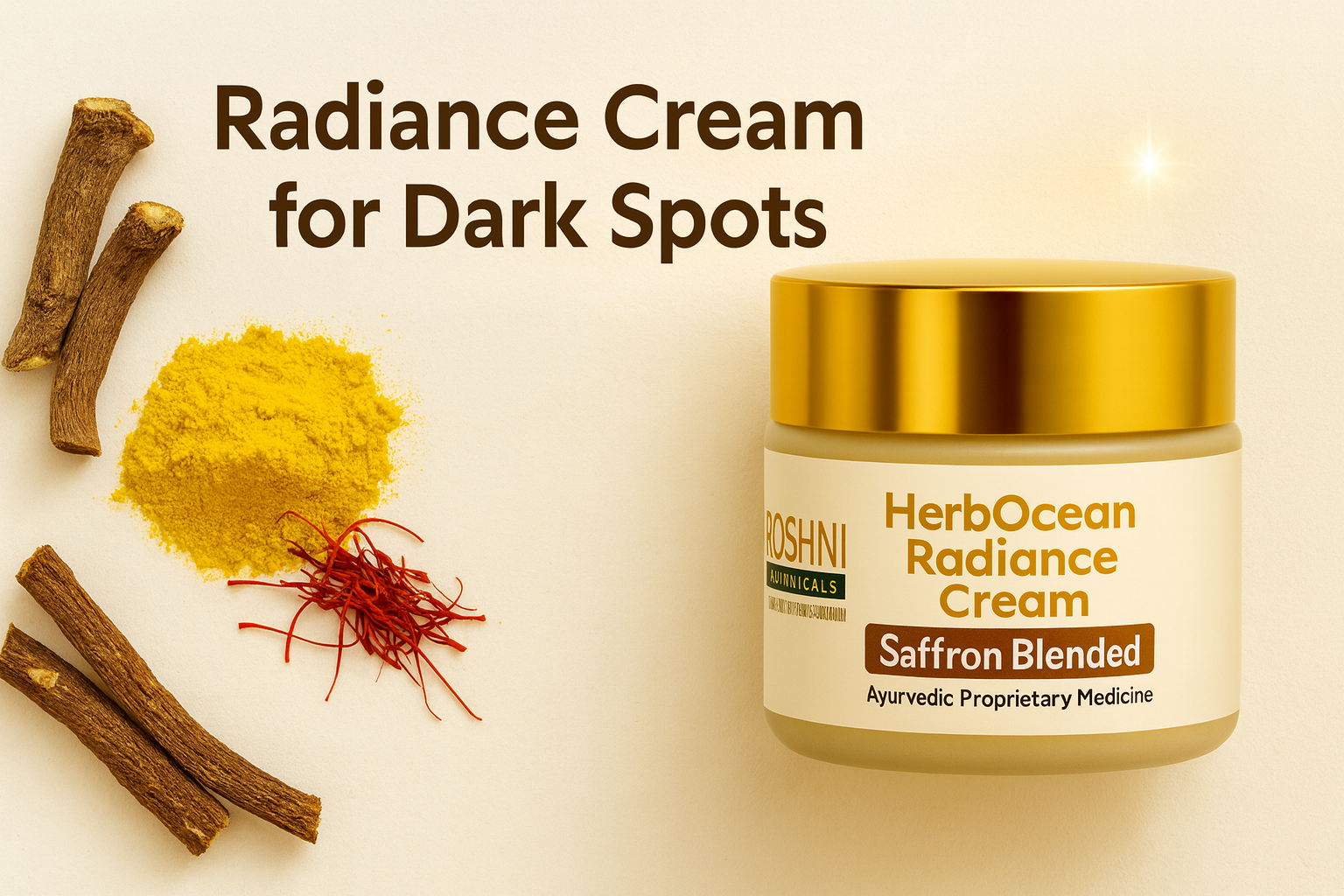
- Ayurvedic + Modern Science Blend: HerbOcean Radiance Cream combines turmeric, red sandalwood, aloe vera, neem, and licorice for holistic brightening.
- Safe, natural, and effective for dark spots, acne scars, and pigmentation.
🌿 What is HerbOcean Radiance Cream?
HerbOcean Radiance Cream by Roshni Botanicals is a natural Ayurvedic formulation designed to fight pigmentation and enhance skin radiance. Its key ingredient, turmeric (Curcuma longa), has been celebrated in Ayurveda for centuries as a “varnya dravya” (complexion enhancer) while modern dermatology supports its role in reducing hyperpigmentation (Vaughn et al., 2016; Patel et al., 2023).
🧪 The Science Behind Turmeric for Skin
How Turmeric Works on Pigmentation
- Melanin Regulation: Curcumin inhibits the tyrosinase enzyme, lowering melanin levels (Majeed et al., 2018; Yokota et al., 1998).
- Anti-inflammatory: Reduces redness and skin irritation (Chainani-Wu, 2003).
- Antioxidant Action: Protects against oxidative stress that accelerates aging (Barbalho et al., 2021).
|
Skin Concern |
Turmeric Benefit |
Research Evidence |
|
Hyperpigmentation |
Inhibits melanin synthesis |
Vaughn et al., 2016 |
|
Acne & Scars |
Antimicrobial & wound healing |
Kumar et al., 2016 |
|
Skin Aging |
Antioxidant & collagen boost |
Barbalho et al., 2021 |
🌟 Key Ingredients in HerbOcean Radiance Cream (with Research)
1. Turmeric (Haldi / Curcuma longa)
- Ayurveda: Used in bridal beauty rituals for natural glow.
- Modern Science:
- Curcumin reduces pigmentation and brightens skin (Patel et al., 2023).
- Clinical reviews confirm turmeric’s role in acne, pigmentation, and skin glow (Vaughn et al., 2016).
📖 References:
- Vaughn, A.R., et al. (2016). Effects of Turmeric on Skin Health: A Systematic Review. Phytotherapy Research.
- Patel, P., et al. (2023). Evaluation of Curcumin for Dermatologic Conditions. Archives of Dermatological Research.
2. Raktchandan (Red Sandalwood / Pterocarpus santalinus)
- Ayurveda: Used for cooling Pitta dosha, removing blemishes.
- Modern Science: Rich in santalins and tannins, acts as an antioxidant and melanin regulator (Mukherjee et al., 2011).
📖 Reference:
- Mukherjee, P.K., et al. (2011). Herbal Cosmetics: Concept and Review. Journal of Ethnopharmacology.
3. Aloe Vera (Aloe barbadensis)
- Ayurveda: Known as Ghritkumari, used to heal burns and cool skin.
- Modern Science:
- Aloesin inhibits tyrosinase, reducing hyperpigmentation (Choi et al., 2002).
- Boosts collagen synthesis and wound healing (Surjushe et al., 2008).
📖 References:
- Choi, S. (2002). Aloesin inhibits tyrosinase activity. Pigment Cell Research.
- Surjushe, A. (2008). Aloe vera: A Short Review. Indian Journal of Dermatology.
4. Neem (Azadirachta indica)
- Ayurveda: Called “Sarva Rog Nivarini” (universal healer), especially for skin disorders.
- Modern Science:
- Neem has antibacterial effects against acne-causing bacteria (Biswas et al., 2002).
- Compounds like azadirachtin and nimbidin reduce skin inflammation.
📖 Reference:
- Biswas, K., et al. (2002). Medicinal properties of neem (Azadirachta indica). Current Science.
5. Licorice Extract (Glycyrrhiza glabra)
- Ayurveda: Balances Pitta, cools and brightens complexion.
- Modern Science:
- Glabridin inhibits UV-induced pigmentation (Yokota et al., 1998).
- Used widely in dermatological creams for melasma and dark spots.
📖 Reference:
- Yokota, T., et al. (1998). Inhibitory effect of glabridin on melanogenesis. Pigment Cell Research.
✅ Benefits of HerbOcean Radiance Cream
- Fades dark spots & acne scars naturally.
- Reduces pigmentation & uneven skin tone.
- Enhances skin texture & glow.
- Provides antioxidant protection.
- Gentle enough for daily use.
📌 How to Use HerbOcean Radiance Cream
- Cleanse your face with a herbal cleanser.
- Apply a pea-sized amount on face & neck.
- Massage gently in upward strokes.
- Use twice daily for best results.
🔗 Also read: How to Use Turmeric for Hyperpigmentation
⚠️ Safety & Precautions
- Free from parabens, sulfates & harsh chemicals.
- Patch test recommended for sensitive skin.
- Use sunscreen after application.
❓ FAQ (Research-Supported)
Q1. Can turmeric really brighten skin?
Yes — studies confirm turmeric reduces melanin production (Majeed et al., 2018; Patel et al., 2023).
Q2. How long till results show?
Visible results in 4–6 weeks, with continuous improvement thereafter.
Q3. Is it suitable for acne-prone skin?
Yes — turmeric and neem are both antimicrobial and reduce acne-causing bacteria (Biswas et al., 2002).
Q4. Why is HerbOcean better than DIY haldi?
Unlike raw haldi, HerbOcean uses standardized extracts that don’t stain and are clinically balanced.
📚 Consolidated References
- Vaughn, A.R., et al. (2016). Effects of Turmeric on Skin Health. Phytotherapy Research.
- Patel, P., et al. (2023). Evaluation of Curcumin for Dermatologic Conditions. Archives of Dermatological Research.
- Mukherjee, P.K., et al. (2011). Herbal Cosmetics: Concept and Review. Journal of Ethnopharmacology.
- Choi, S. (2002). Aloesin inhibits tyrosinase activity. Pigment Cell Research.
- Surjushe, A. (2008). Aloe vera: A Short Review. Indian Journal of Dermatology.
- Biswas, K., et al. (2002). Medicinal properties of neem. Current Science.
- Yokota, T., et al. (1998). Glabridin and melanogenesis inhibition. Pigment Cell Research.
- Gopinath, H., Karthikeyan, K. (2018). Turmeric: A condiment, cosmetic and cure. Indian Journal of Dermatology.