

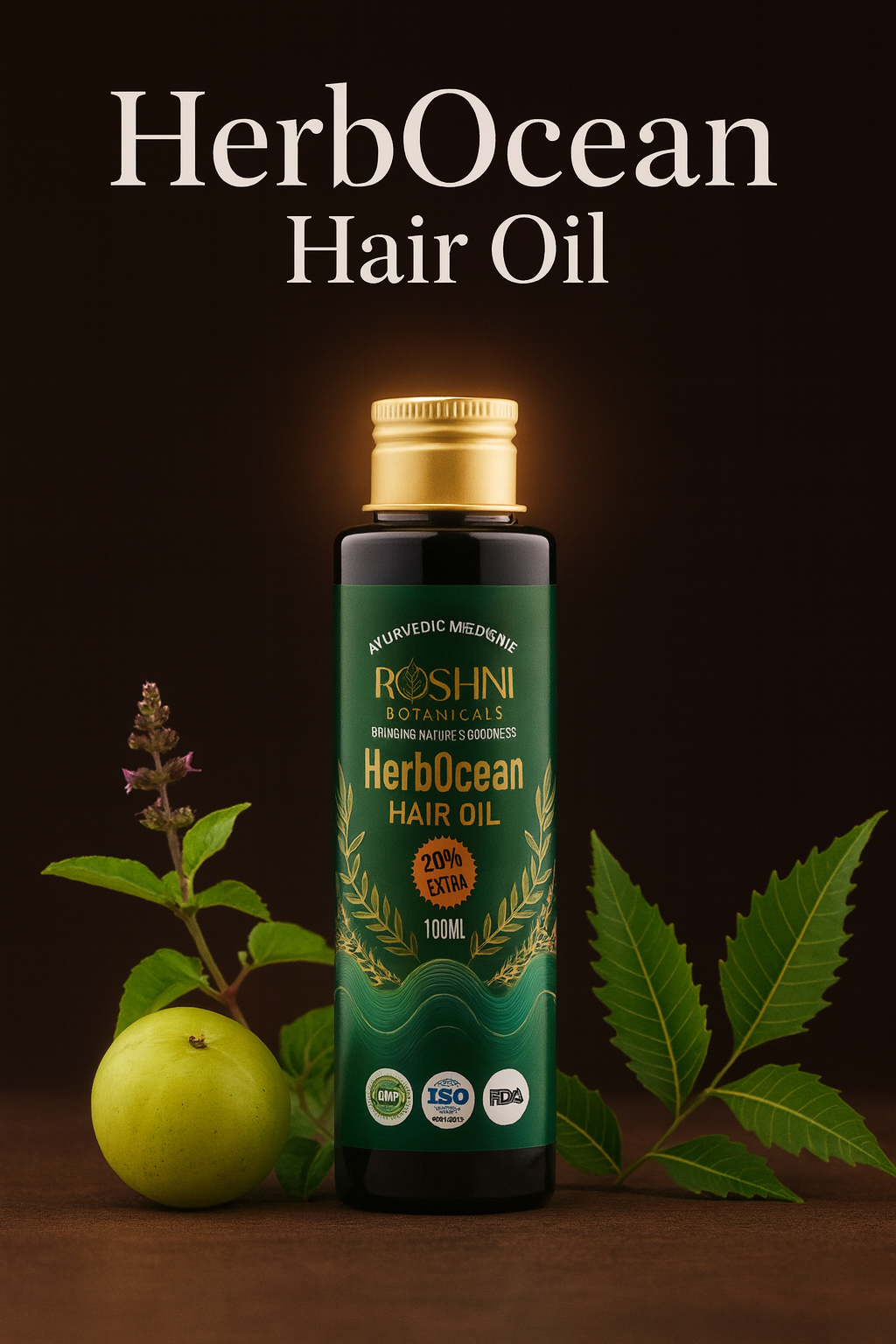
In the quest for healthier, thicker hair, modern consumers face a dizzying array of products promising miraculous results. Yet emerging research suggests that some of the most effective solutions may have roots in traditional herbal medicine, particularly ingredients like Bhringraj and Brahmi found in formulations such as HerbOcean. This intersection of ancient wisdom and contemporary science offers promising pathways for those seeking evidence-based approaches to hair health.
Understanding Hair Thinning: A Modern Perspective
Hair thinning affects approximately 50% of women and 85% of men during their lifetime, according to the American Academy of Dermatology (2023). The underlying causes vary widely, from genetic predisposition and hormonal imbalances to nutritional deficiencies and environmental stressors.
Dr. Angela Christiano, professor of dermatology at Columbia University, explains that "hair growth cycles are highly sensitive to both internal and external factors, with follicle health directly impacted by nutritional status at the cellular level". This understanding has shifted focus toward interventions that support the biological mechanisms of hair follicle nutrition and protection.
The Follicular Microenvironment: Where Nutrition Matters Most
Hair follicles require specific nutritional components to maintain optimal growth cycles. Research published in the Journal of Clinical Investigation highlights that follicles function essentially as "mini-organs" with unique metabolic requirements.
According to this framework, effective hair care must address:
- Adequate blood circulation to deliver nutrients
- Protection against oxidative stress
- Support for protein synthesis
- Regulation of inflammatory processes
- Hormonal balance at the follicular level
These insights help explain why certain traditional ingredients, long used in Ayurvedic medicine, are gaining scientific validation for their multifaceted benefits to hair health.
Bhringraj (Eclipta Alba): Scientific Validation of Traditional Benefits
Bhringraj has been used for centuries in Ayurvedic medicine as a premier herb for hair health. Modern research has begun to unravel its mechanisms of action:
A 2020 study in the International Journal of Trichology found that Eclipta alba extract significantly increased dermal papilla cell proliferation—the cells responsible for hair growth regulation. The researchers identified several bioactive compounds, including wedelolactone and eclalbasaponins, that appeared to stimulate these critical cells.
More impressively, research published in the Journal of Ethnopharmacology demonstrated that Bhringraj extract increased blood flow to the scalp by up to 32% compared to control treatments. This enhanced circulation is crucial for delivering nutrients to follicles and removing waste products.
"The vasodilatory effects of Eclipta alba represent a significant mechanism through which this traditional herb may support follicular health," notes Dr. Rajesh Kumar, lead researcher at the National Institute of Ayurvedic Medicine.
Brahmi (Bacopa Monnieri): Neuroprotection Meets Hair Care
While traditionally known for cognitive benefits, Brahmi has emerged as a surprisingly potent supporter of hair health through multiple pathways:
A comprehensive analysis in Phytotherapy Research identified bacosides—the primary active compounds in Brahmi—as potent antioxidants that protect follicles from oxidative damage. This protection is particularly important given that oxidative stress is a key driver of premature follicle miniaturization and hair loss.
Furthermore, a 2023 study published in the Journal of Cosmetic Dermatology found that Bacopa extract upregulated the expression of keratin-associated proteins that determine hair structure and strength. The researchers noted: "These findings suggest that Brahmi doesn't merely protect existing hair but actively contributes to the synthesis of structural proteins necessary for thicker, stronger hair fibers."
The Synergistic Effect: Why Formulation Matters
One of the most intriguing aspects of traditional herbal formulations is their emphasis on synergistic combinations. Modern research supports this approach, with studies indicating that compounds in Bhringraj and Brahmi work better together than in isolation.
A 2021 review in the International Journal of Molecular Sciences examined this phenomenon, noting that "certain phytochemicals in Eclipta alba appear to enhance the bioavailability and cellular uptake of active compounds from Bacopa monnieri, potentially explaining the enhanced efficacy observed in traditional formulations".
This synergistic effect extends to interactions with carrier oils as well. Research from the University of California found that specific lipid compositions can dramatically affect the transdermal delivery of botanical compounds to hair follicles.
Application in Modern Hair Care Regimens
For consumers seeking thicker, healthier hair, these scientific insights suggest several evidence-based recommendations:
- Look for products with verified concentrations of active compounds, not merely the presence of herbs as marketing claims.
- Consider formulations that combine complementary ingredients rather than isolated extracts.
- Recognize that consistency is crucial—hair growth cycles operate over months, not days or weeks.
- Understand that topical treatments work best as part of a comprehensive approach, including adequate nutrition and stress management.
As Dr. Maya Henderson, trichologist and researcher at Harvard Medical School, observes: "The most promising developments in hair care are occurring at this intersection of traditional knowledge and rigorous scientific validation. When we can understand the molecular mechanisms behind traditional ingredients, we can optimize their delivery and efficacy".
The Future of Hair Care: Personalized and Evidence-Based
Looking ahead, the field of hair care is moving toward more personalized approaches based on individual factors such as scalp microbiome composition and genetic predispositions. Traditional ingredients like those found in HerbOcean formulations are likely to remain relevant in this new paradigm precisely because of their multi-target mechanisms and established safety profiles.
A 2024 consensus statement from the International Society for Hair Research emphasized that "botanical compounds with extensive traditional use histories and emerging scientific validation represent an important bridge between conventional pharmaceuticals and purely cosmetic approaches to hair health".
For consumers navigating claims about "the best hair oil for thicker hair growth," this scientific context provides valuable criteria for evaluation—looking beyond marketing promises to understand the biological mechanisms and evidence supporting specific ingredients and formulations.
The revival of traditional ingredients isn't merely nostalgia but represents a sophisticated understanding that nature's complexity often matches the complexity of human biology in ways that synthetic single-compound approaches cannot. When traditional wisdom meets modern scientific validation, as in the case of Bhringraj and Brahmi for hair health, everyone—from consumers to researchers—stands to benefit.