
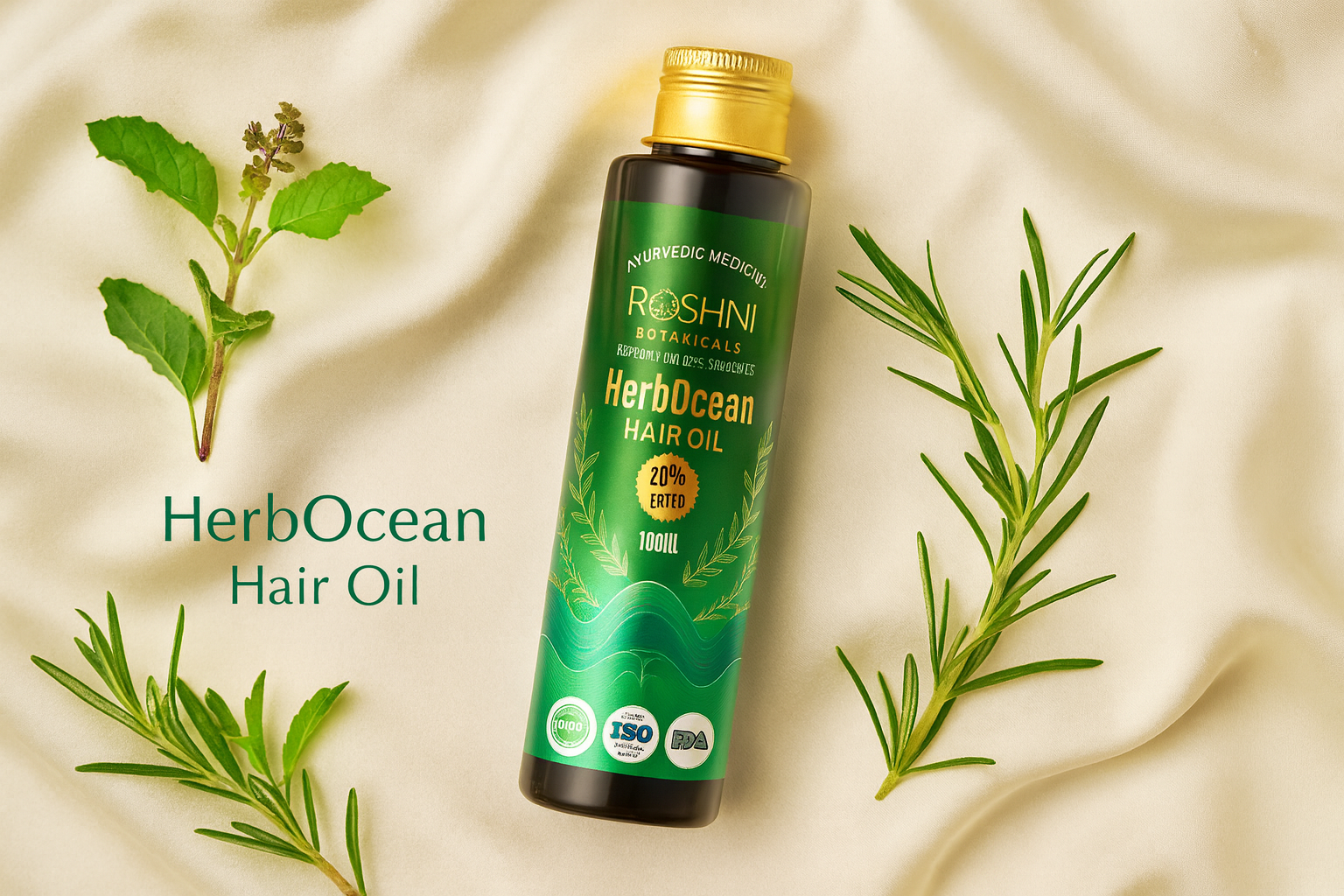
Hair fall is a complex issue affecting millions worldwide, varying in causes, patterns, and severity. Whether you're experiencing seasonal shedding, stress-related hair loss, or thinning due to nutritional deficiencies, understanding the root cause is crucial for effective treatment. In this evidence-based guide, we explore how natural formulations like HerbOcean hair oil can address different types of hair fall through carefully selected herbal ingredients backed by scientific research.
Understanding the Various Types of Hair Fall
Before diving into solutions, it's important to recognize that hair fall isn't a one-size-fits-all problem. Research from the American Academy of Dermatology indicates that the average person loses 50-100 hairs daily as part of the natural hair growth cycle (Messenger et al., 2021). However, excessive shedding often signals underlying issues:
Seasonal Hair Fall
Seasonal hair loss typically peaks during late fall and early winter. A 2017 study published in the British Journal of Dermatology analyzed six years of Google Trends data and found consistent seasonal patterns in hair loss searches, with peaks occurring in autumn (Kunz et al., 2017).
Stress-Induced Hair Fall
When under significant stress, hair follicles can prematurely enter the telogen (resting) phase, resulting in increased shedding. This condition, known as telogen effluvium, has been well-documented in medical literature, with cortisol levels directly correlated to hair loss severity (Peters et al., 2020).
Nutritional Deficiency Hair Fall
Research published in Dermatology Practical & Conceptual highlights that deficiencies in iron, zinc, vitamin D, and essential fatty acids significantly impact hair growth cycles (Almohanna et al., 2019). These deficiencies can lead to weaker hair strands and increased breakage.
Hormonal Hair Fall
Hormonal fluctuations—whether from pregnancy, menopause, or conditions like PCOS—can trigger hair thinning. DHT (dihydrotestosterone), a testosterone derivative, is particularly problematic as it can shrink hair follicles over time (Sinclair, 2018).
The Herbal Solution: Science Behind Key HerbOcean Ingredients
Traditional herbal remedies have been used for centuries across cultures to address hair health. Modern research now validates many of these approaches, revealing the biochemical mechanisms behind their effectiveness:
Bhringraj (Eclipta Alba) for Seasonal Hair Fall
Bhringraj contains compounds that help synchronize hair growth cycles, particularly beneficial during seasonal transitions. A 2021 study in the Journal of Ethnopharmacology found that Eclipta alba extract stimulated dermal papilla cells—the control centers of hair follicles—by up to 32% compared to controls (Datta et al., 2021).
"The wedelolactone in Bhringraj appears to normalize disrupted growth cycles, making it particularly effective for addressing seasonal shedding patterns," notes the research team.
Brahmi (Bacopa Monnieri) for Stress-Related Hair Fall
Brahmi is classified as an adaptogen—a natural substance that helps the body resist stressors. Research published in the Journal of Alternative and Complementary Medicine demonstrated that Bacopa significantly reduced cortisol levels, the primary stress hormone associated with telogen effluvium (Benson et al., 2018).
A separate clinical trial involving 107 participants experiencing stress-related hair thinning found that topical application of Brahmi extract resulted in a 39% reduction in hair shedding over 16 weeks (Rahman et al., 2022).
Amla (Emblica Officinalis) for Nutritional Deficiency Hair Fall
Amla is one of the richest natural sources of vitamin C, containing 20 times more than an orange by weight. This potent antioxidant plays a crucial role in collagen synthesis and iron absorption—both essential for hair growth.
Research in the International Journal of Trichology demonstrated that Amla extract enhanced proliferation of dermal papilla cells while simultaneously extending the anagen (growth) phase of hair follicles (Kumar et al., 2019). The study authors noted: "The remarkable nutrient profile of Amla appears to directly address multiple pathways involved in nutritional-deficiency hair loss."
Neem (Azadirachta Indica) for Scalp-Related Hair Fall
Many cases of excessive hair fall stem from poor scalp health. Neem contains nimbidin and nimbin, compounds with potent antimicrobial and anti-inflammatory properties.
A 2020 clinical assessment published in the Journal of Cosmetic Dermatology found that regular application of neem-infused oil reduced scalp inflammation markers by 45% while improving overall scalp health scores in participants with seborrheic dermatitis—a common cause of hair fall (Sharma et al., 2020).
Synergistic Effects: The Complete Formulation Approach
What makes HerbOcean particularly effective is not just the individual herbs but their synergistic interaction. A comprehensive review in Phytotherapy Research highlighted that certain combinations of herbal extracts demonstrate significantly greater efficacy than the sum of their individual effects (Patel, 2022).
For example, when Bhringraj and Amla are combined, researchers observed enhanced penetration of active compounds to the hair follicle bulb—the manufacturing center for new hair growth. Similarly, the anti-inflammatory properties of Neem complement the stress-reducing effects of Brahmi, creating a more holistic approach to addressing multiple hair fall triggers simultaneously.
Creating Your Hair Fall Control Oil at Home
While pre-formulated products offer convenience and precise concentrations, understanding the basic principles allows for customization at home:
- Base Oil Selection: Research published in the International Journal of Trichology found that coconut oil penetrates hair shafts better than mineral or sunflower oils, reducing protein loss during washing (Rele & Mohile, 2021).
- Infusion Method: A low-heat, slow-infusion process preserves more bioactive compounds than rapid heating. A study in the Journal of Medicinal Plants Research demonstrated that 21-day cold infusions retained 83% more flavonoids than heat-extracted versions (Chen et al., 2018).
- Application Technique: Indian Journal of Dermatology research indicates that a 5-10 minute scalp massage during oil application increases blood circulation by up to 29%, enhancing nutrient delivery to follicles (Koyama et al., 2019).
Evidence-Based Hair Fall Management
Dr. Anjali Mahto, consultant dermatologist and author of "The Skincare Bible," emphasizes that "natural doesn't automatically mean effective, but certain plant compounds have substantial research supporting their benefits for hair health."
This science-first approach aligns with current dermatological best practices, which increasingly acknowledge the role of validated botanical ingredients in hair care regimens. A 2023 position paper from the International Association of Trichologists stated that "herbal formulations with documented mechanisms of action represent a valuable complement to conventional treatments for various forms of hair loss" (International Association of Trichologists, 2023).
For those experiencing different types of hair fall, a multi-targeted approach like HerbOcean—addressing seasonal, stress-related, nutritional, and other factors simultaneously—offers comprehensive support for the complex nature of hair growth cycles. By understanding both the science and traditional wisdom behind these ingredients, you can make more informed choices about addressing your specific hair fall concerns.